
If you are looking for drought tolerant landscaping ideas in Central Florida to lower your water bill, the best approach is to combine Florida-friendly plants, efficient irrigation, healthier soil, and thoughtful landscape design. Reducing water use does not mean settling for a plain yard. Around Lake Nona, many homeowners are replacing high-maintenance landscapes with outdoor spaces that stay attractive while requiring less irrigation.
Schedule a design consultation with JLC Outdoors Lawn & Landscape Services or call (407) 595-5818. A professional site evaluation can help you create a landscape that uses water more efficiently while improving curb appeal.
Water conservation has become a priority for many homeowners throughout Winter Park. Higher utility costs, long periods of summer heat, and Central Florida's fast-draining sandy soil make traditional landscapes harder and more expensive to maintain.
Neighborhoods across Dr. Phillips are also seeing more homeowners choose native and drought-tolerant plants. Many Florida HOAs have become more flexible about Florida-friendly landscaping, giving homeowners additional options without sacrificing appearance.
Design the landscape around the climate
A successful Florida landscape begins with the environment instead of fighting against it.
Central Florida receives heavy rainfall during part of the year, followed by extended periods of heat. Sandy soil drains quickly, which means lawns and ornamental plants can dry out faster than many homeowners expect.
Designing around those conditions creates healthier landscapes that require less supplemental watering.
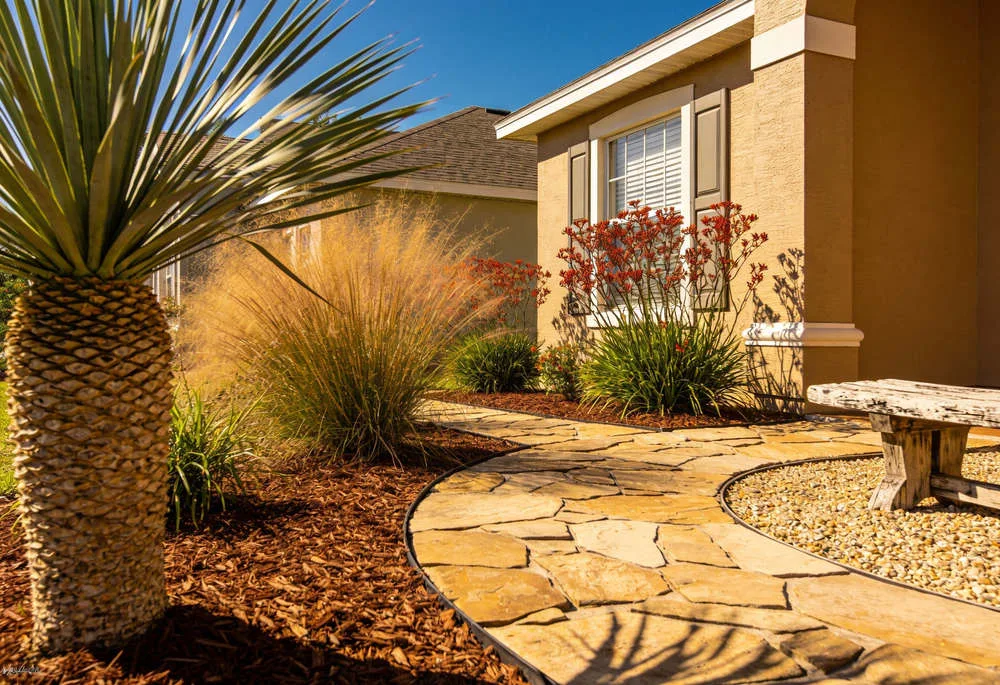
Instead of relying on large areas of thirsty turf, many homeowners are reducing lawn size and increasing planting beds filled with drought-tolerant material.
Choose plants that need less water
Native and Florida-friendly plants adapt well to local conditions because they are suited to the climate.
Many homeowners combine ornamental grasses, flowering perennials, shrubs, and shade trees that continue looking attractive while requiring less irrigation than traditional landscapes.
Grouping plants with similar watering needs also improves efficiency because every irrigation zone can be adjusted for the specific material growing there.
That approach helps prevent overwatering while supporting healthier plant growth.
Reduce lawn areas with thoughtful design
Grass remains an important part of many landscapes, but it does not have to cover the entire property.
Replacing selected lawn areas with planting beds, decorative stone, mulch, or attractive hardscape features reduces the amount of irrigated turf without making the landscape feel empty.
Properly designed patios, walkways, seating areas, and landscape borders also add usable outdoor living space while decreasing long-term water demand.
A professionally planned residential landscaping project considers those elements together instead of treating them as separate improvements.
Upgrade irrigation before replacing plants
Even the most drought-tolerant landscape benefits from efficient watering.
Traditional spray heads often distribute water less efficiently than drip irrigation, particularly in planting beds where water can be lost to evaporation, overspray, or wind.
Drip irrigation systems can operate at efficiencies exceeding 90 percent, while conventional spray systems often perform within a lower range depending on site conditions. Drip irrigation also delivers water directly to the root zone instead of coating leaves, which may help reduce conditions that encourage fungal problems.
Modern residential irrigation systems frequently include smart controllers and rain sensors that automatically adjust watering schedules based on weather conditions, helping homeowners avoid unnecessary irrigation.
Healthy soil uses water more effectively
Landscape design is not only about what grows above the ground.
Organic matter improves soil structure, helping the root zone retain moisture longer while supporting healthier plant development.
Mulch also plays an important role by slowing evaporation, reducing temperature fluctuations, and limiting weed growth that competes for available moisture.
Small improvements beneath the surface often produce noticeable improvements above it.
Combine irrigation, landscaping, and hardscapes into one plan
Many homeowners install irrigation one year, redesign planting beds the next, and add hardscapes sometime later.
Planning those projects together usually creates a better result.
JLC Outdoors Lawn & Landscape Services approaches outdoor spaces as complete design-build projects. Irrigation, planting design, hardscapes, drainage, and lawn areas are planned as one coordinated landscape rather than a series of unrelated improvements.
That approach allows every part of the property to complement the others while reducing unnecessary water use over the long term.
Book a landscape design consultation with JLC Outdoors Lawn & Landscape Services or call (407) 595-5818. It is also a good time to discuss combining smart irrigation upgrades with a complete landscape redesign.