
Quick answer: To protect your yard from winter freezes, select resilient species like dwarf azaleas, live oaks, and mondo grass. These cold hardy plants for central Florida survive sudden temperature drops down to 28 °F. For sensitive plants, water the soil deeply before a frost and cover them with frost cloths.
Central Florida's mild winters usually feel like a tropical paradise. But an unexpected January frost can turn your vibrant yard into a brown, wilted mess overnight. Replacing dead tropicals costs homeowners hundreds or even thousands of dollars every spring. You can prevent this expensive cycle by selecting resilient species that handle the chill. Need help preparing your yard for the cold? Contact JLC Outdoors Lawn & Landscape Services at (407) 595-5818 to protect your investment today.
By strategically selecting plants that tolerate freezing temperatures, your yard maintains its curb appeal all year. Here is everything you need to know about keeping your landscape alive during our brief, but brutal, cold snaps.
How Do Central Florida Microclimates Affect Plant Survival?
Microclimates dictate exactly which plants survive a freeze in your specific yard. A microclimate is a small area where the temperature differs from the general surroundings. In Orlando, temperatures can drop to 30°F in open fields but stay around 35°F near brick walls or under heavy tree canopies.
Understanding the difference between a frost and a hard freeze helps you prepare. Frost forms when moisture freezes on plant leaves, typically around 32 °F to 36 °F. A hard freeze happens when temperatures drop below 28 °F for at least four hours. That deep cold destroys plant cells.
If you live in College Park with mature tree canopies, your yard stays warmer than a brand new, wide-open construction lot in Lake Nona. Brick homes and concrete driveways absorb heat during the day and release it at night. Group your sensitive plants near these heat-holding structures.
What Are the Best Cold Hardy Plants for Central Florida?
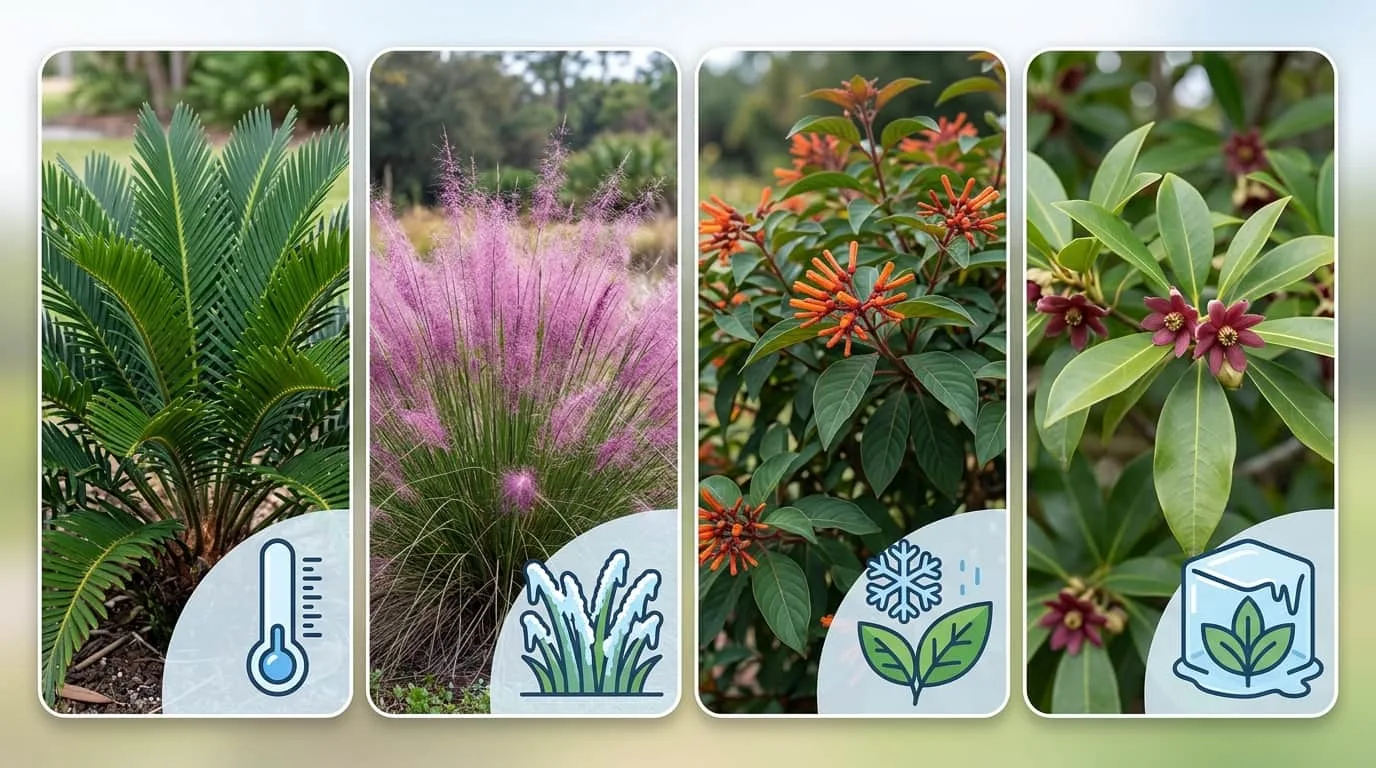
The most reliable cold hardy plants for central Florida can tolerate temperatures dipping into the high 20s without suffering permanent damage. Our technicians typically find that native and well-adapted species recover fastest after a winter chill.
Shrubs and Hedges
Dwarf azaleas, Indian hawthorn, and pittosporum make excellent foundation plants. Dwarf azaleas provide a spectacular spring bloom and handle the cold effortlessly. Indian Hawthorn creates a dense, low-maintenance border that ignores frost entirely. Pittosporum grows quickly and works perfectly for privacy screens. Plant these shrubs in well-draining soil and add a two-inch layer of pine bark mulch to insulate their root systems.
Trees
Live oaks, cabbage palms, and East Palatka holly trees anchor your landscape through the worst winter weather. Live oaks provide massive, heat-trapping canopies that protect the smaller plants below them. The native Cabbage Palm (our state tree) handles hard freezes easily. East Palatka holly offers beautiful red berries in winter and ignores the cold completely. When installing trees, consider their mature size. A live oak needs at least 40 feet of clearance from your house.
Perennials and Groundcovers
Mondo grass, liriope, and firebush add texture and color below your shrubs. Mondo grass and liriope survive freezes without losing their green color. Firebush might drop its leaves after a 28 °F night, but the roots survive. It bounces back quickly in March, pushing out new growth.
Edibles
You can still grow food during our cooler months. Cold-hardy citrus varieties like Satsuma mandarins handle temperatures down to 26 °F. Florida-adapted blueberries and certain fig varieties actually require a certain amount of winter chill to produce fruit. Keep these fruit-bearing plants heavily mulched and water them thoroughly before a freeze hits.
How Do You Protect Plants Before a Frost Hits?
Protect your sensitive plants by watering the soil deeply 24-48 hours before the temperature drops. Wet soil holds up to 40% more heat than dry soil. This acts like a radiator, releasing warmth upward into the plant canopy overnight.
Never cover your plants with plastic tarps. Plastic traps moisture and transfers the freezing cold directly to the leaves, burning them instantly. Instead, use breathable cotton sheets or specialized frost cloths. Drape the cloth all the way to the ground to trap the heat rising from the soil. Weigh the edges down with bricks or soil so the wind doesn't blow the cover away. Remove the covers by 10:00 AM the next day so the plants can absorb sunlight.
If your plants do suffer frost damage, do not prune them immediately. The dead, brown leaves act as an insulating blanket for the healthy wood underneath. Wait until the middle of March, when the threat of frost has passed, to cut back the dead branches.
How Can You Design a Frost-Resilient Yard?
Design a resilient yard by grouping plants with similar cold tolerance together. Place your most sensitive tropicals close to your home's south-facing walls to catch the maximum amount of winter sun.
Use cold-hardy evergreen trees and large shrubs as windbreaks on the north and northwest sides of your property. These barriers block the biting winter winds that dry out and freeze smaller plants. Proper site selection prevents massive losses. For professional planning and installation, our residential landscaping team can design a beautiful layout customized for your neighborhood's specific microclimate.
How Should You Care for Plants After a Freeze?
After the winter passes, slowly resume your normal fertilization and watering schedules. Apply a slow-release granular fertilizer in early April once new growth begins.
Winter stress weakens plants, making them more susceptible to pests and diseases in the spring. Watch for aphids on new growth and treat them early with insecticidal soap. During dry spring spells, ensure your plants get about one inch of water per week. If you notice dry spots or poor coverage, it might be time to check your sprinklers. Our residential irrigation experts can calibrate your system to ensure optimal water delivery before the extreme summer heat arrives.
Keep Your Central Florida Landscape Green All Winter
You do not have to settle for a brown, dying yard every January. By incorporating the right cold hardy plants for central Florida into your design, you ensure your property stays vibrant and healthy year-round. Remember to water deeply before a freeze, use proper frost cloths, and hold off on pruning until the spring.
If you want a stunning yard that survives the chill without the stress, call the local experts. Contact JLC Outdoors Lawn & Landscape Services at (407) 595-5818 to schedule your free estimate and start building your resilient landscape today.